
Procure Group Ltd · Northampton & surrounding areas
Condensation Specialists in Northampton
Condensation is the most common cause of damp and mould in occupied homes — and one of the most misunderstood. It is not a defect in the walls; it is what happens when moist air meets a surface cold enough for the moisture to condense. Controlling it means understanding both sides of that equation.
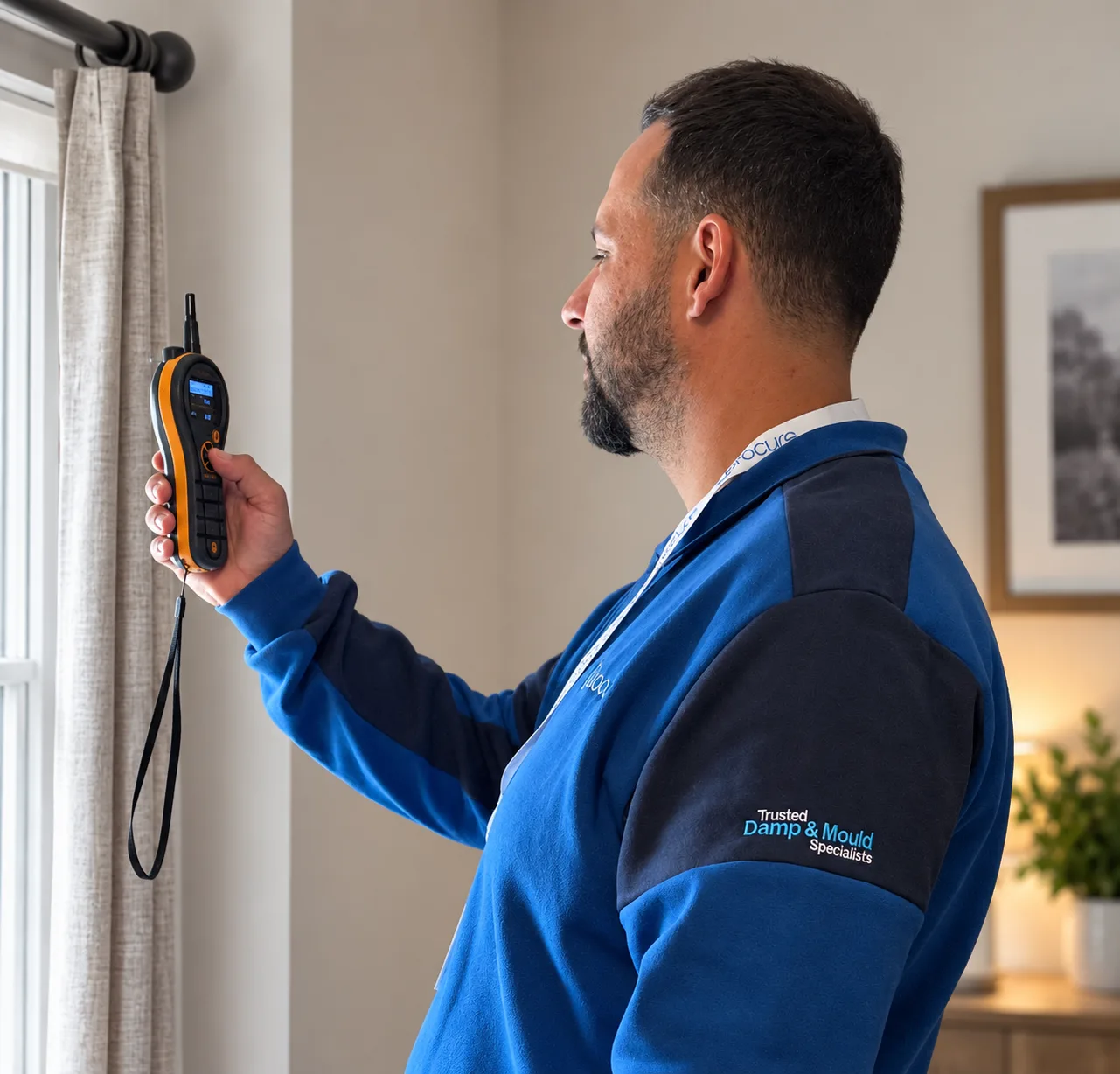
The simple physics
Air holds moisture, and warmer air holds more of it. When moist air cools against a cold surface — a window, an external wall, a ceiling corner — it can reach its dew point, and the moisture it can no longer hold is deposited as liquid water. That is condensation.
Everyday life produces a surprising amount of moisture: cooking, showering, drying clothes indoors and even breathing all add litres of water to the air each day. Where that moisture cannot escape, humidity rises and condensation follows.
The factors we assess
A condensation assessment looks at the whole picture, because several factors usually combine:
- Relative humidity and measured moisture levels in the air
- Surface temperatures and dew point risk
- Cold bridging at corners, lintels, reveals and floor junctions
- Extract ventilation in kitchens and bathrooms — presence, capacity and use
- Background ventilation, including trickle vents and airbricks
- Heating patterns — intermittent versus steady background heat
- Moisture production from occupation and lifestyle
- Occupancy levels relative to the size of the property
- The building fabric itself — insulation, glazing and construction
Practical, proportionate control
Most condensation problems respond to a combination of measures: better extraction where moisture is produced, adequate background ventilation, steadier heating, and addressing cold spots where the fabric allows. Where insulation or ventilation improvements are warranted, we explain what they will and will not achieve.
Because condensation is so often confused with rising or penetrating damp, an assessment can also save you from paying for damp-proofing work your property does not need.
Struggling with condensation?
Tell us where it forms, when it is worst and how the property is heated and ventilated. We will advise on the right assessment.