
Procure Group Ltd · Northampton & surrounding areas
Rising Damp in Northampton
Rising damp is real, but it is also one of the most over-diagnosed problems in British housing. Low-level dampness has several possible causes, and only one of them is rising damp. Procure Group Ltd investigates the evidence before reaching any conclusion.
What rising damp actually is
Rising damp is ground moisture drawn upward through the pores of masonry by capillary action — the same effect that draws water up a sheet of blotting paper. It typically appears at the base of ground-floor walls and, left to itself, will rarely rise much beyond a metre, because evaporation from the wall surface limits how high the moisture can climb.
Most modern properties have a damp-proof course (DPC) designed to stop this process. Genuine rising damp generally implies that the DPC is absent, has failed, or has been bypassed.
Typical signs and locations
Rising damp most often affects the bottom of ground-floor walls, particularly external walls. Indicators can include:
- A horizontal tide mark or staining band at low level
- Peeling paint, blistering or perished plaster near the floor
- White, fluffy salt deposits on the wall surface
- Deteriorating skirting boards or adjacent timber
- A musty smell at low level
Why low-level damp is not automatically rising damp
Condensation forms on the coldest surfaces first, which are often the bases of external walls. A leaking pipe, a bridged DPC, raised ground levels or rainwater splashback can all produce low-level moisture that looks remarkably like rising damp.
Bridging is particularly common: where external render, a raised path, a flower bed or internal plaster crosses the level of the DPC, moisture can bypass it entirely. In those cases the correct remedy is to remove the bridge — not to inject the wall.
The role of hygroscopic salts
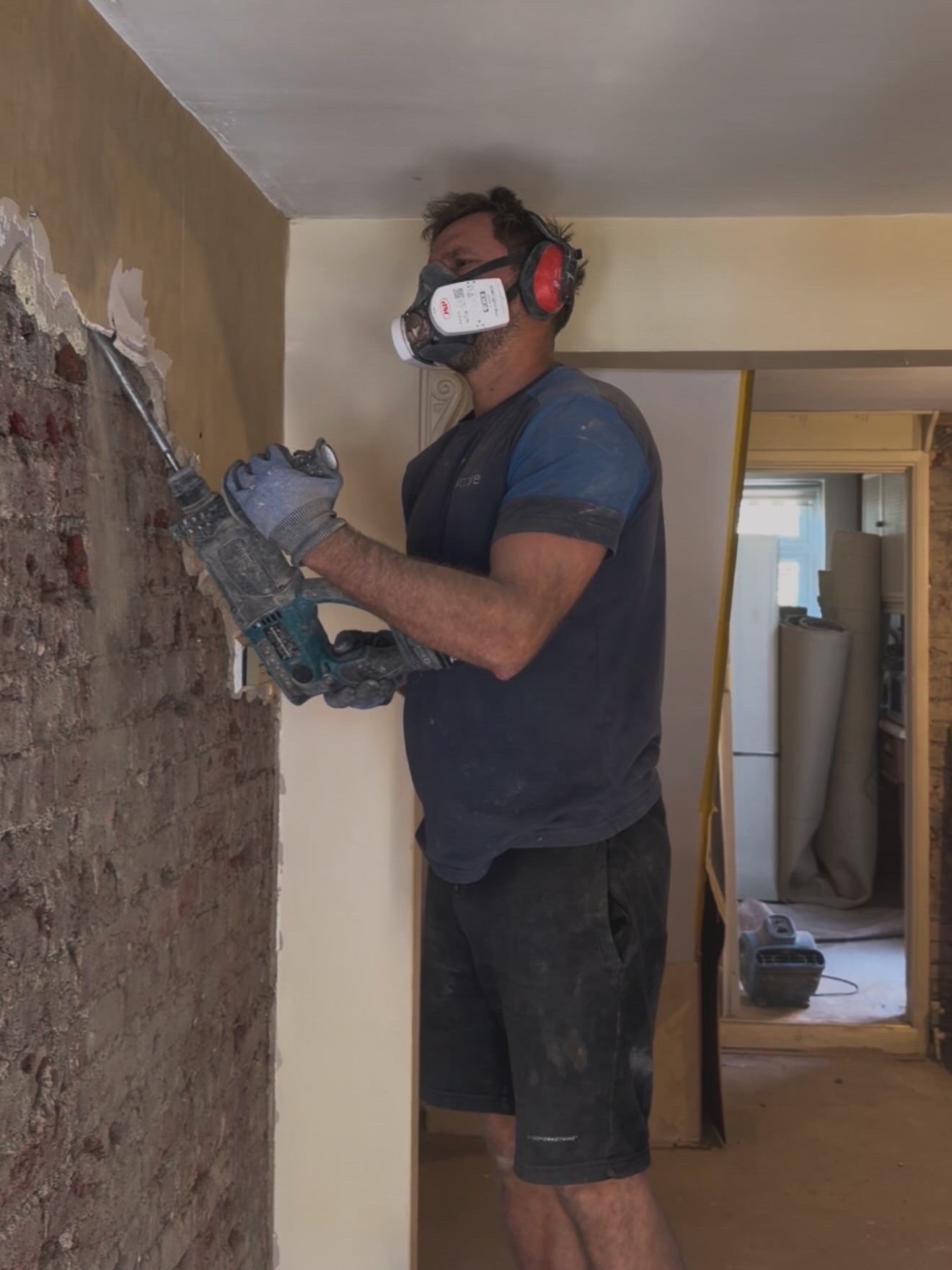
Ground water carries dissolved salts — chlorides and nitrates — which are deposited in the plaster as moisture evaporates. These hygroscopic salts attract moisture from the air, so a wall can look damp long after the original source has been controlled. This is why genuine rising damp treatment normally includes removing and replacing contaminated plaster, and why a moisture meter reading alone cannot distinguish old salt contamination from an active moisture source.
Why proper investigation matters
Because the remedies differ so completely, the diagnosis matters. Our investigations consider moisture distribution patterns, the construction and level of any DPC, external ground levels, salt analysis where applicable, and the internal conditions of the property. Where rising damp is confirmed, we specify an appropriate damp-proof course system and the associated replastering. Where it is not, we tell you what the evidence supports instead.
Suspect rising damp? Get it investigated
Tell us what you are seeing at low level and we will advise on the right assessment for your Northampton property.